My first book project, Abstraction: A Literary History,
traces a slow-moving rise and fall in abstract language across centuries
of literary history. Mixing close and distant reading, the book uncovers
how these changes in literary semantics mediate changes in social
organization. I focus on three literary forms of abstract language:
‘abstract style’, in the syntactic symmetries and semantic formulae of
the periodical essay; ‘abstract persons’, in the personified
abstractions of the mid-century ode; and ‘abstract realism’, in the
“tell, don’t show” narration of the early realist novel. Through this
history and framework, the book also aims to recuperate abstraction as
both a method and an object of literary study.
Notes
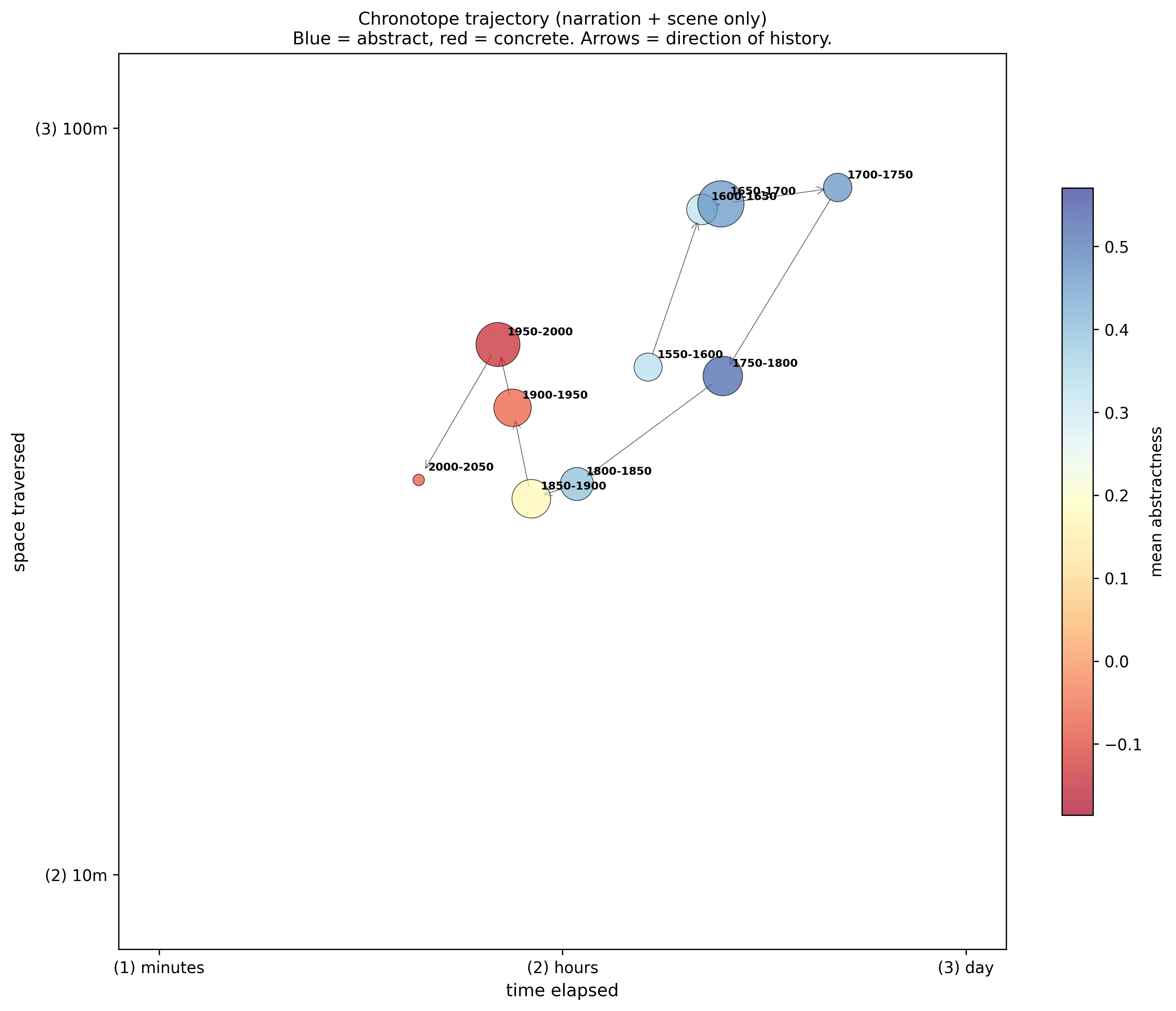
The amount of story time elapsed vs. space traversed in 500-word
passages of fiction, 1550-2020. Periods of fiction more linguistically
abstract (blue) are also more chronotopically “abstract”: further
removed from real-time narration. Data annotated by Qwen3.6-27B for
8,208 passages in 1,232 texts.
Continue →
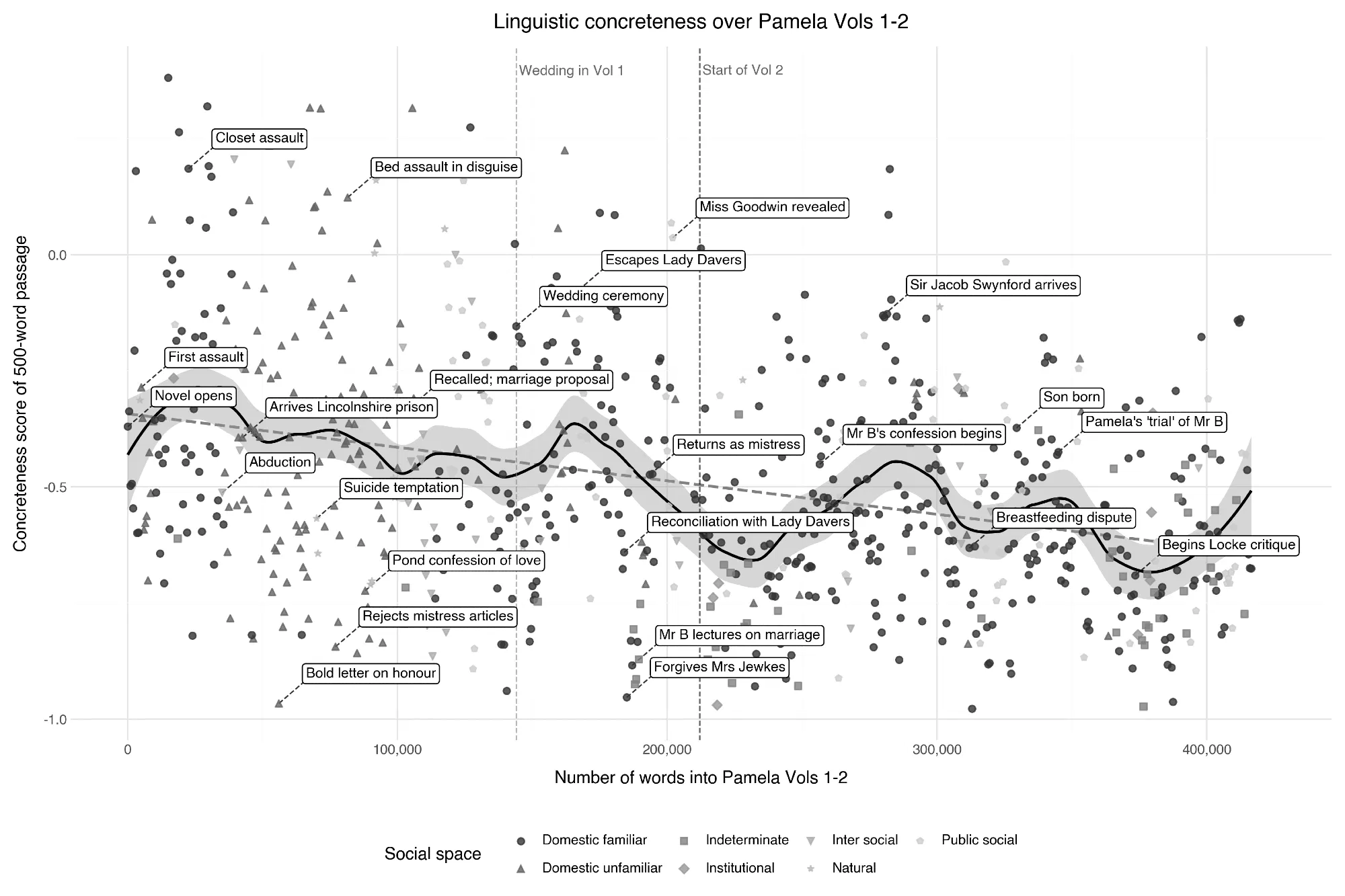
Linguistic concreteness over Richardson’s Pamela, Vols I (1740) and
II (1742). Concreteness measured via word embeddings; social spaces
annotated by LLM. For my book chapter on “Abstract Realism”. Arguing
that Pamela’s wedding signifies the transition from (concrete)
picaresque to (abstract) novel.
Continue →
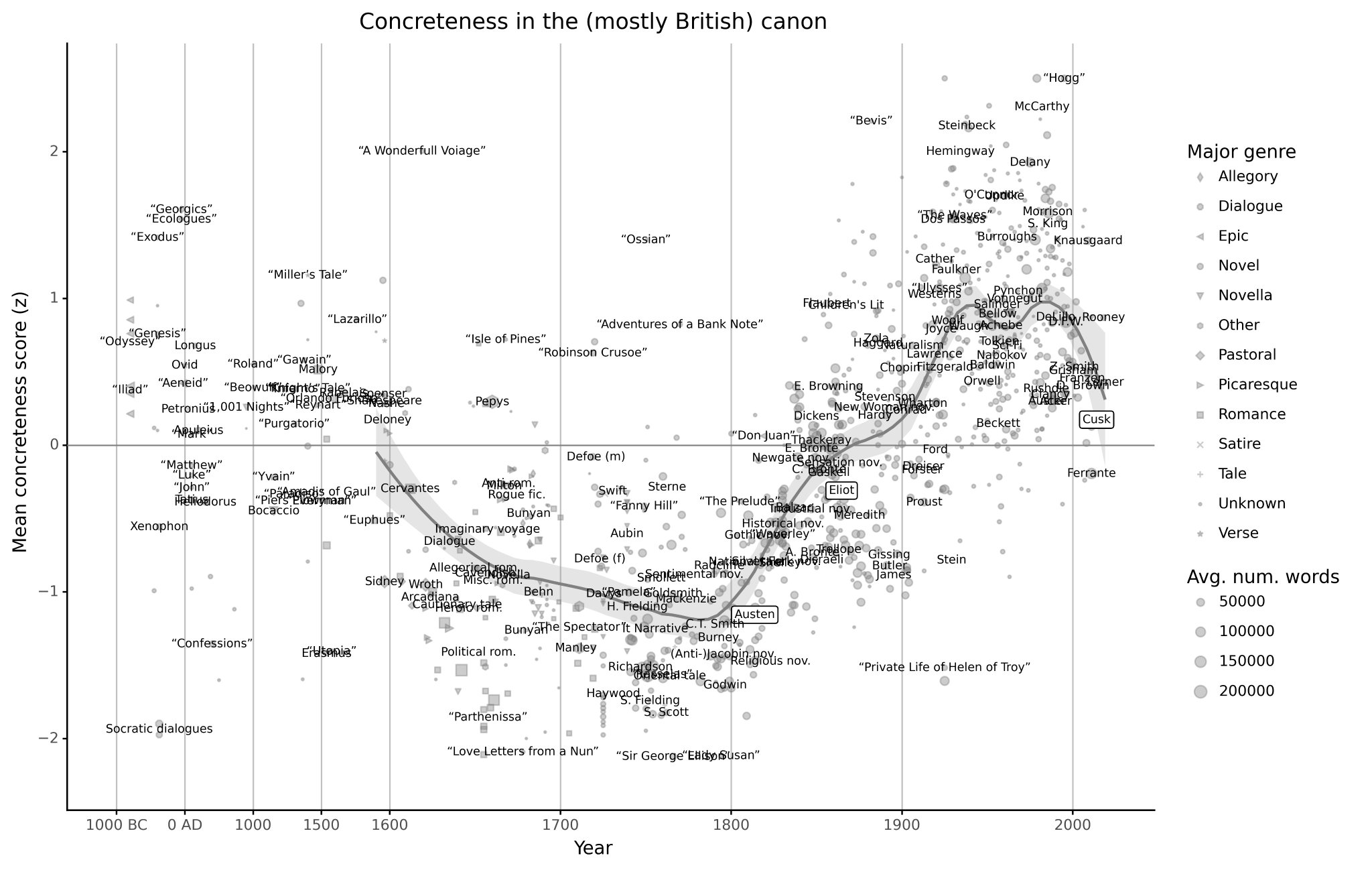
I don’t know how this post got resurrected but some people are
dunking on it, which is fine and honestly kind of flattering – how many
humanists can be dunked on from a single image! – but here’s a newer
version, for better dunks.
Continue →
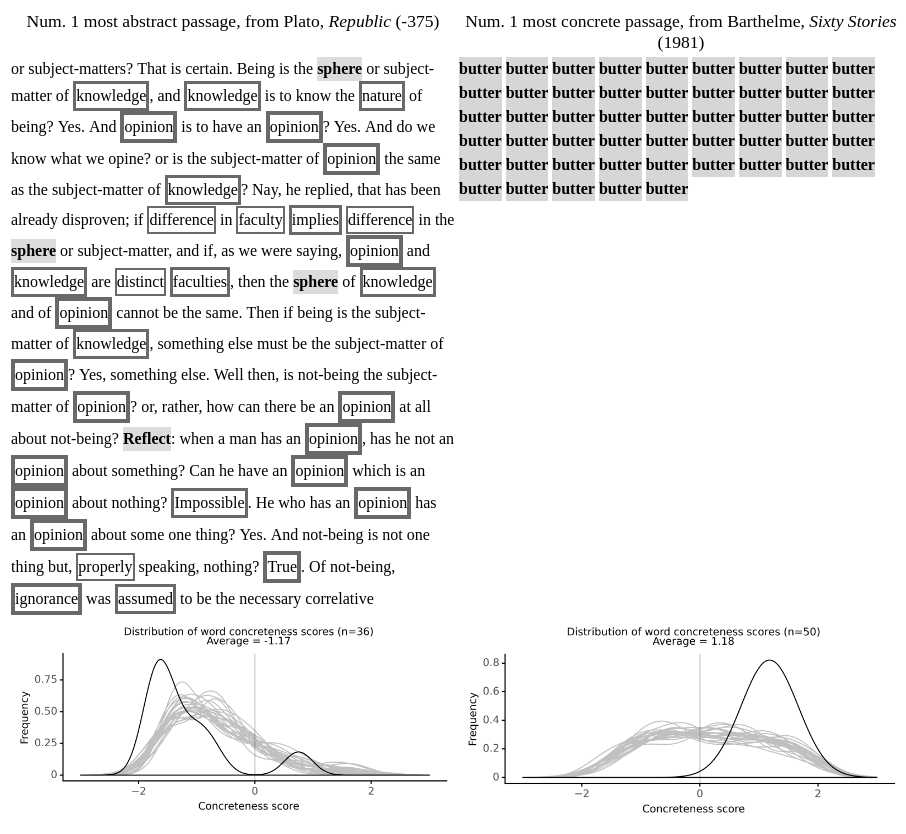
Here you have it folks, the most linguistically “abstract” and
“concrete” passages in the (English+) fictional canon. Profound
stuff
Continue →
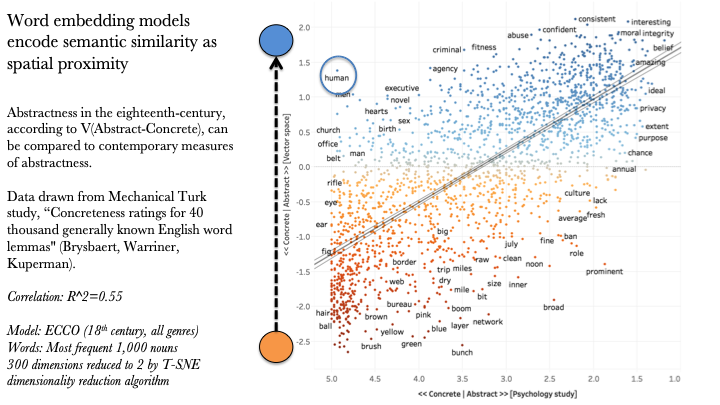
Just posted the talk I gave last week to King’s College, with the
text synced to the slides: ryanheuser.org/assets/talks/k…
It’s a summary of my dissertation work on abstract language in the
novel, and explains how that work addresses “immateriality,” the
official topic of my postdoc.
Continue →
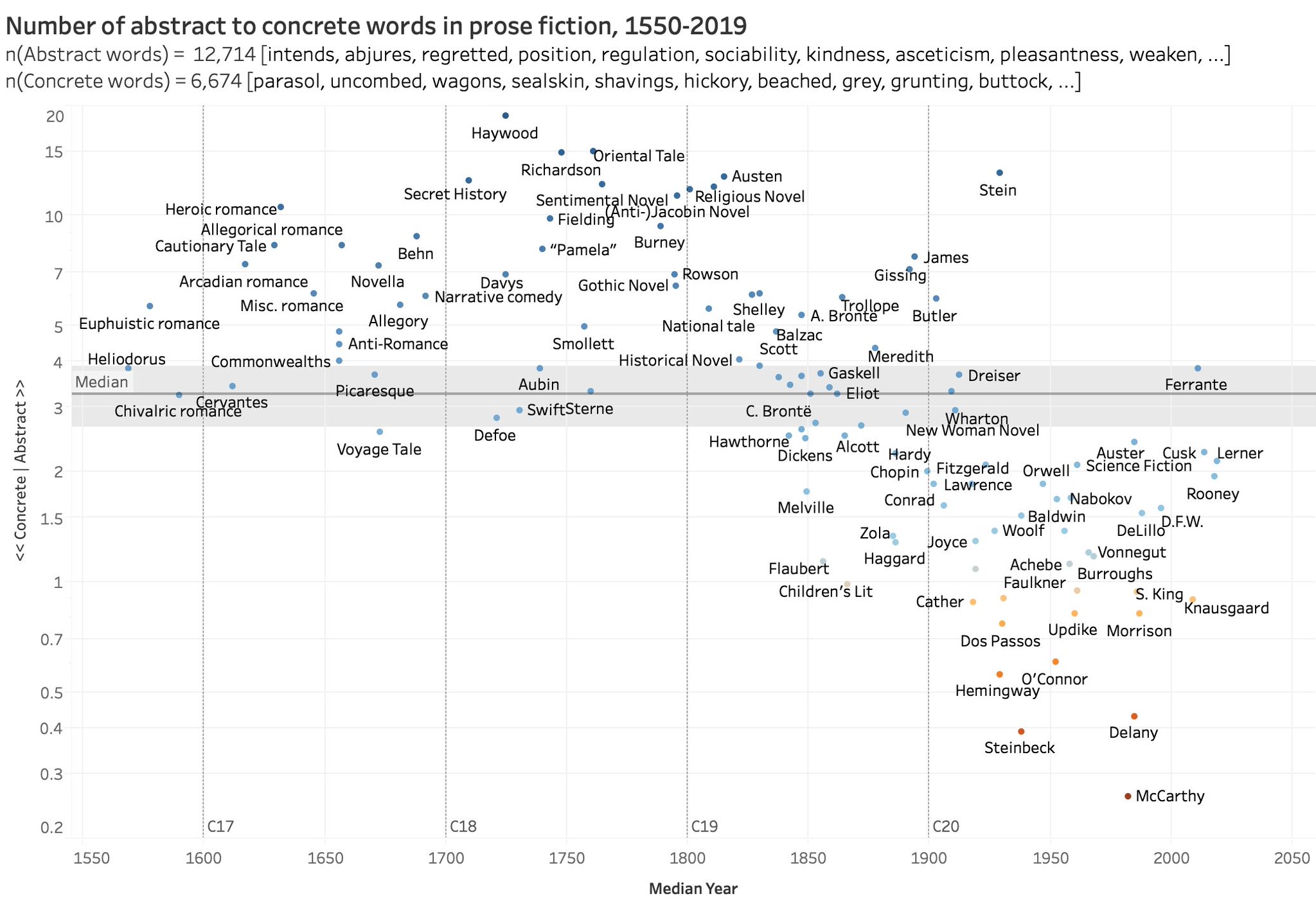
A linguistic map of the canon
Originally posted on Twitter.
Figure 1 of my diss, “Abstraction: A Literary History.” Filing this
Friday
Originally posted on Twitter.
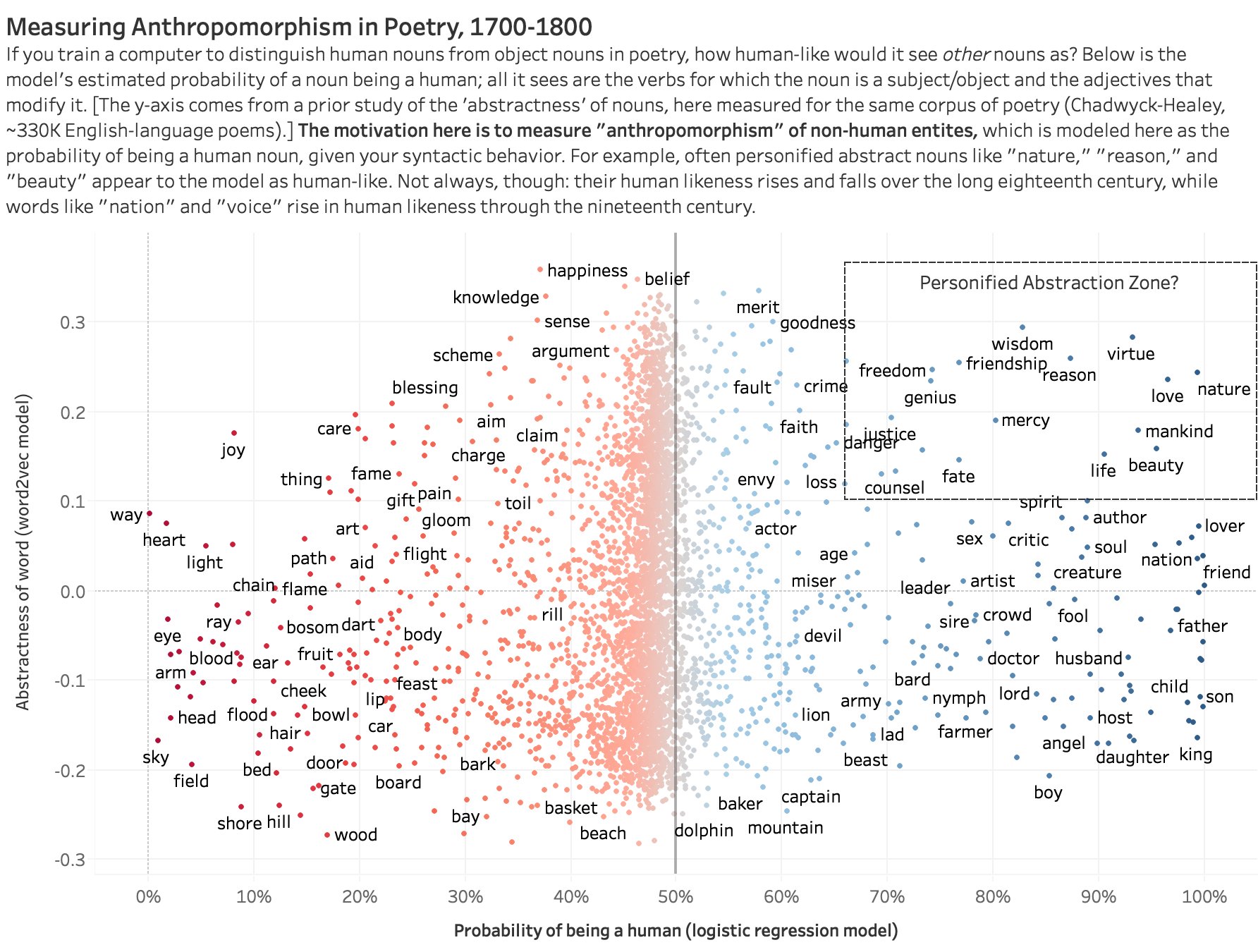
For my chapter on personification, I’m exploring ways machine
learning can help us trace the ‘human likeness’ of non-human nouns
across history. Given only which verbs a noun like ‘nation’ is a subject
or object of, how human-like does the noun appear to the model?
Continue →
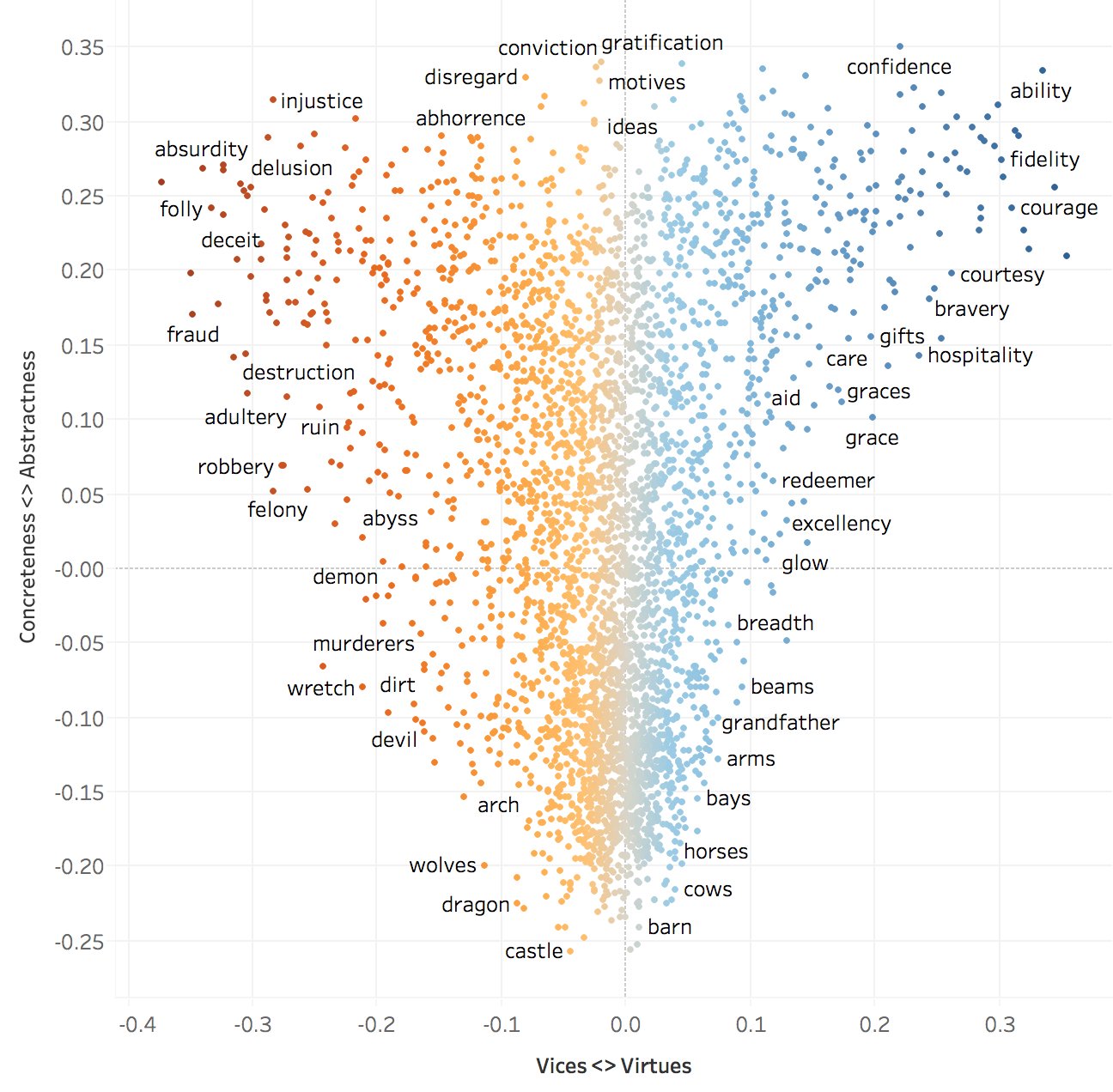
As abstract words get more concrete (moving down on y-axis), the
range of their moral value (along x-axis) narrows.
Originally posted on Twitter.
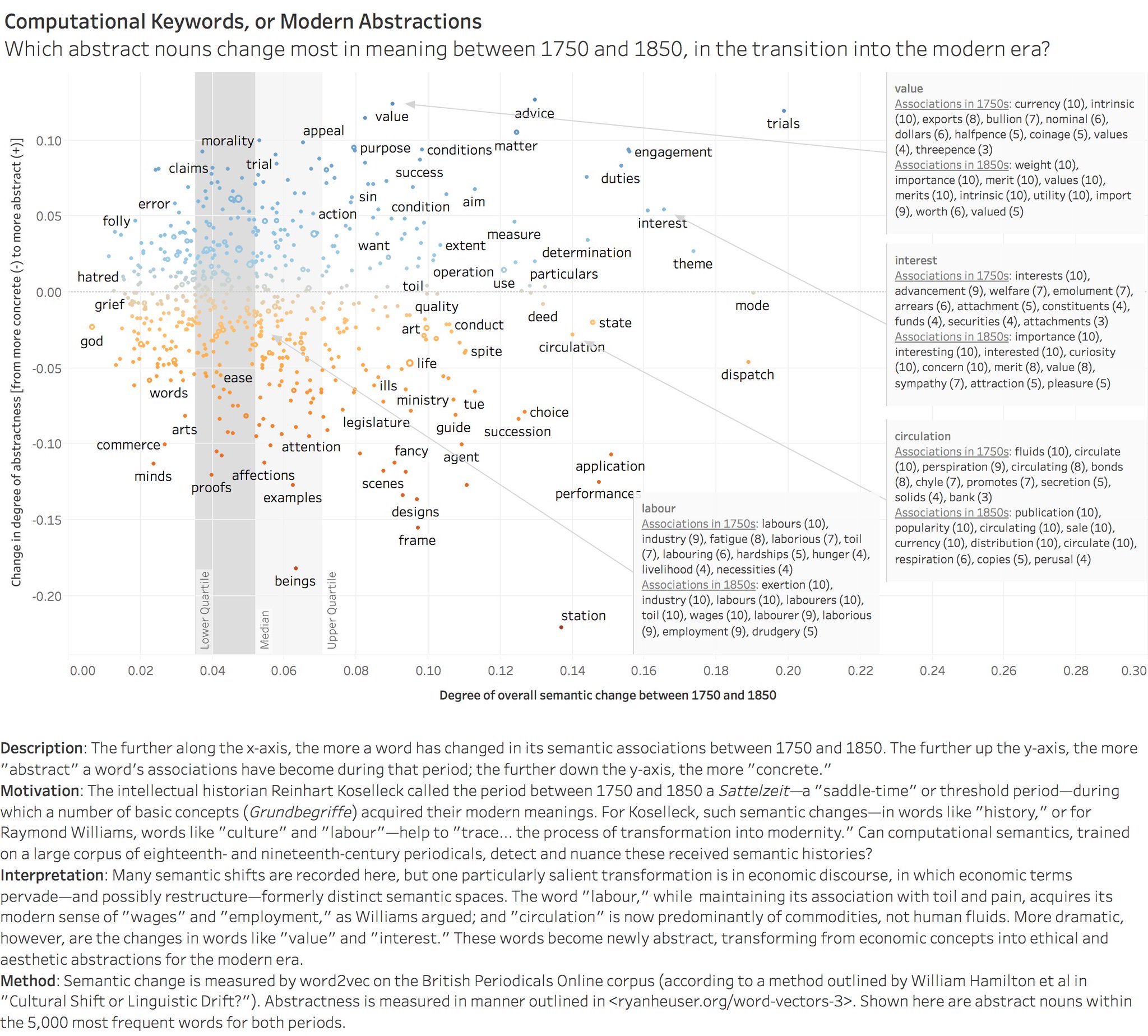
Computational Keywords, or Modern Abstractions: Using computational
semantics to find which abstract nouns changed the most in meaning
during the transition into modernity. (= DH work I’m doing now in my
dissertation on abstraction in 18th-century literature.)
Originally posted on Twitter.
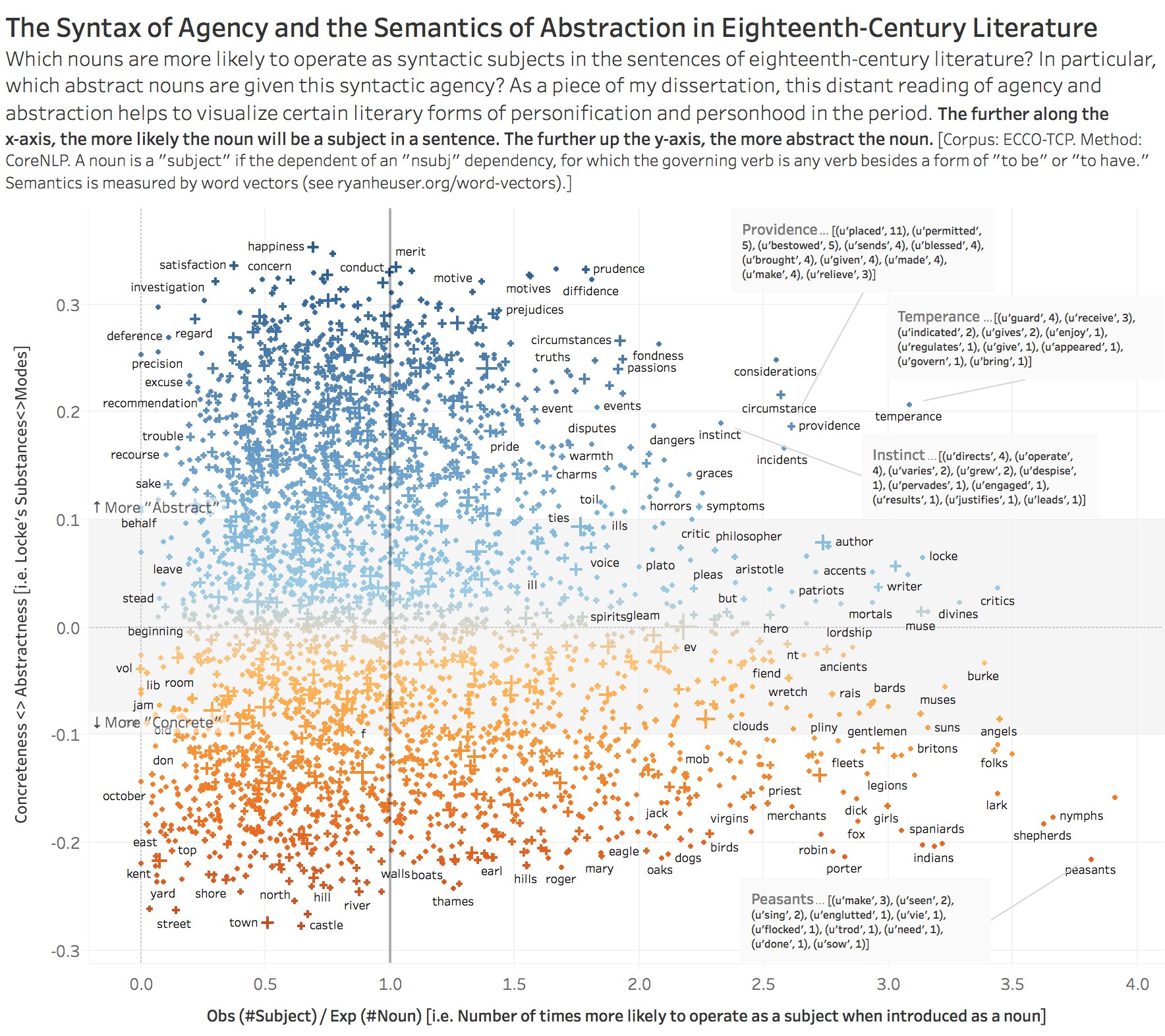
Visualizing the components of personification: which abstract nouns
are more likely to be given syntactic agency in 18C literature?
Originally posted on Twitter.
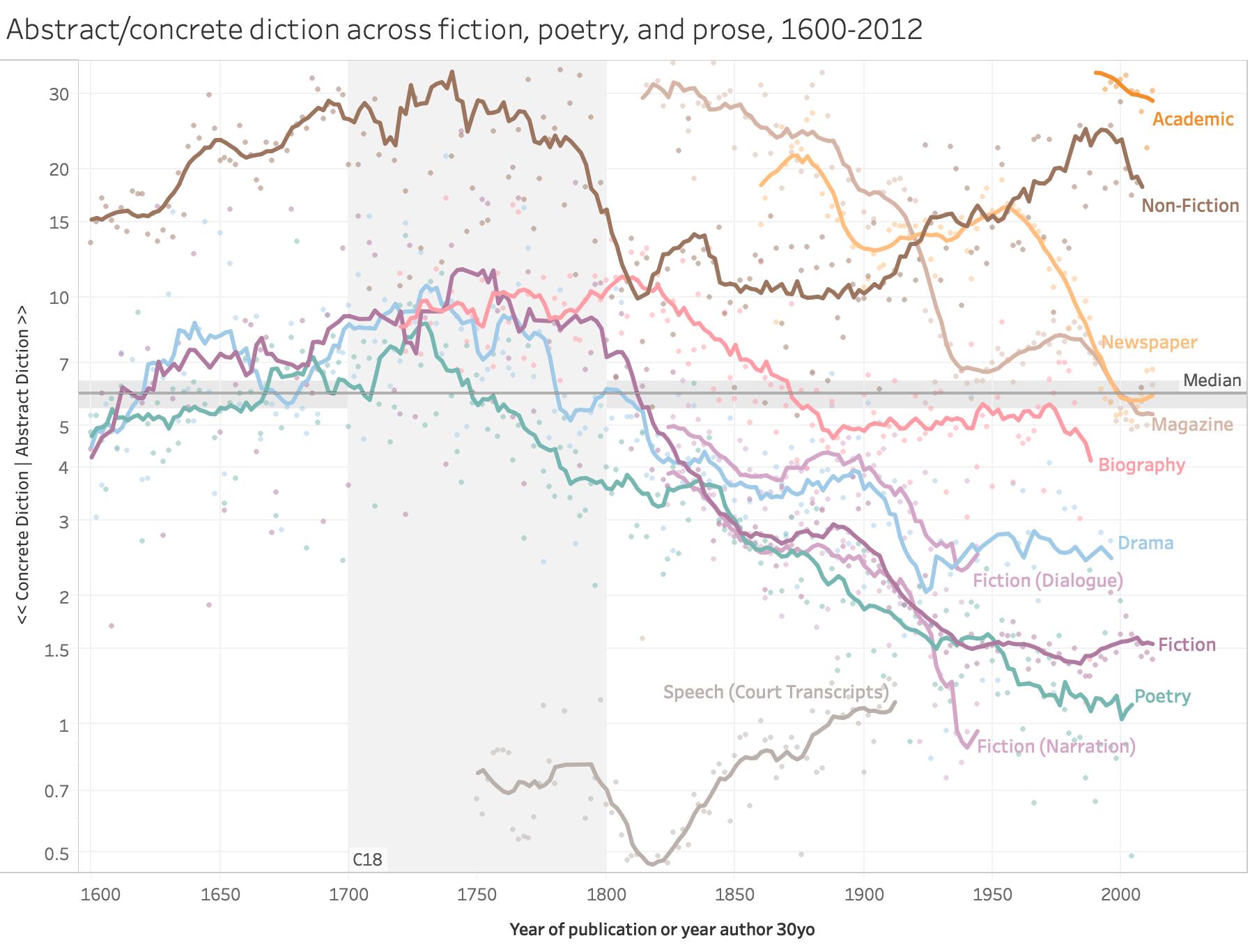
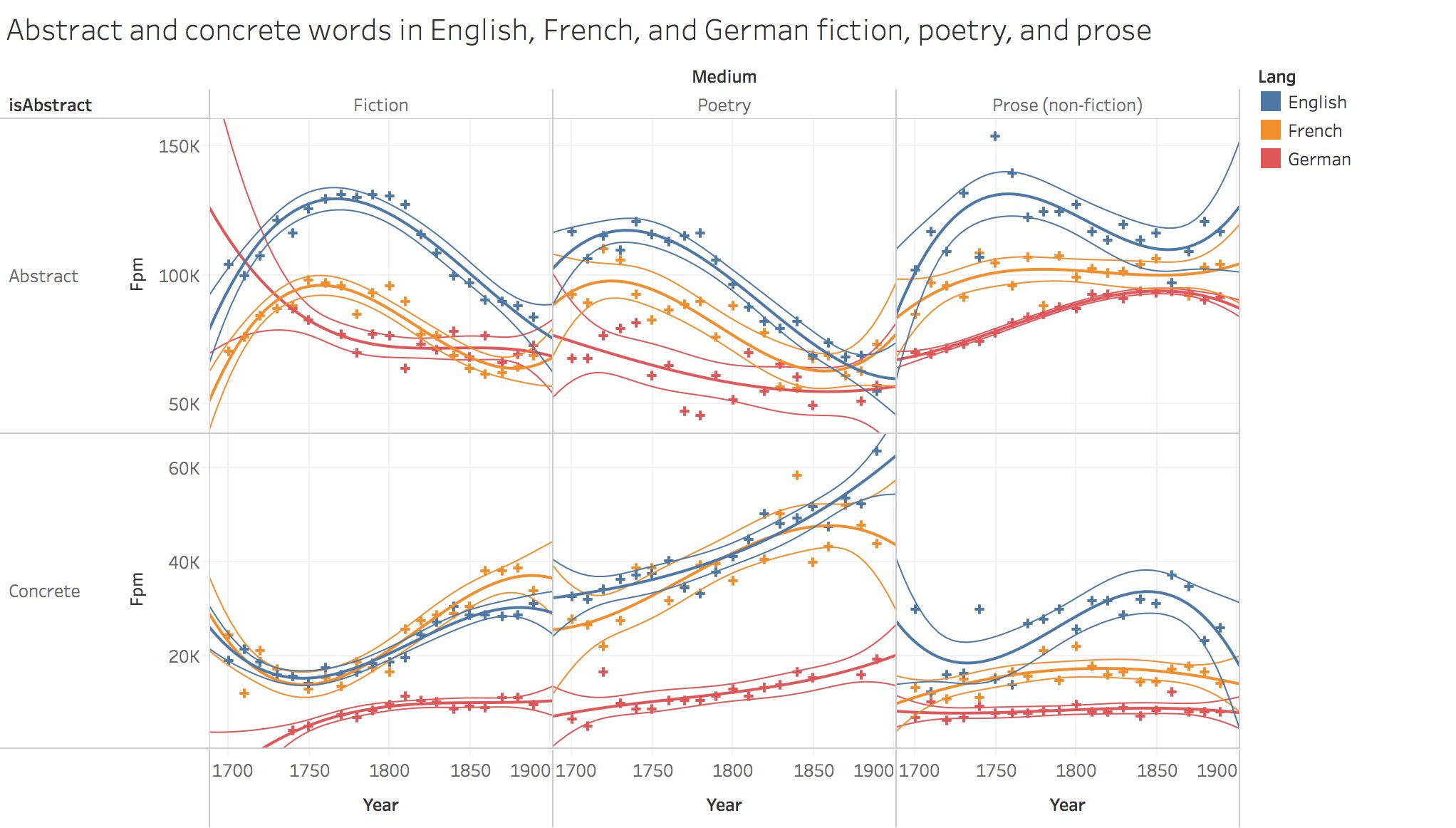
A literary history of abstract and concrete words in English, French,
and German fiction, poetry, and prose, 1700-1900. #WordVectorsIn18C
Continue →
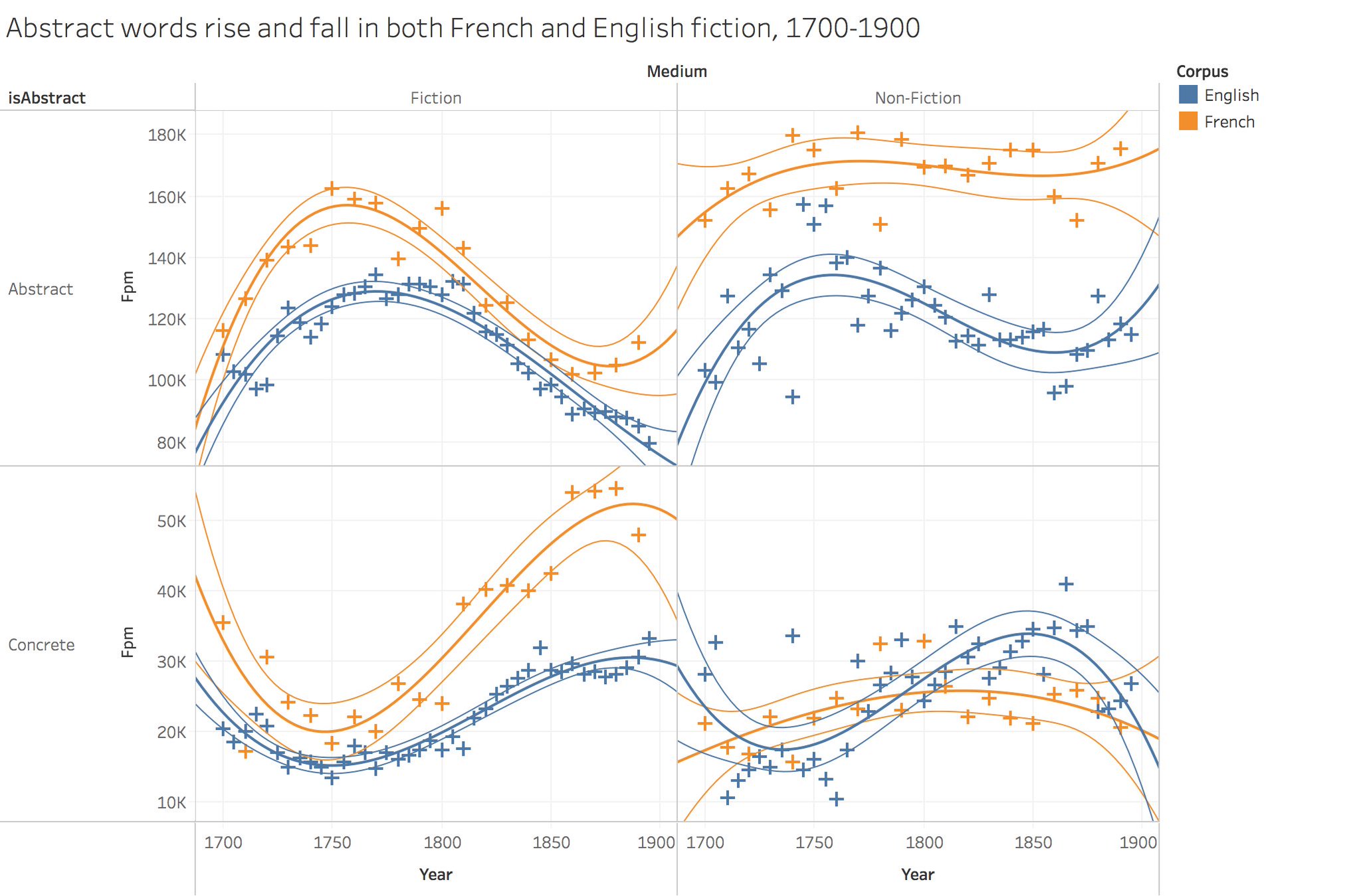
Abstract words rise in frequency across 18th century, then fall
across 19th century—in both French and English fiction.
#WordVectorsIn18C
Originally posted on Twitter.
← All projects