How do large language models idealize the culture they reproduce?
Analysing over 15,000 AI-generated poems, I found that models produce
formally conservative verse, rhymed and regularly metered, at rates
exceeding even the most traditional periods of literary history; that
this bias persists even when they are instructed against traditional
forms; and that training data does not explain it. Parallel patterns
appear in history: prompted to recall publication records, models
produce demographic distributions that obscure well-known patterns of
exclusion. Instruction tuning is one mechanism, as models fine-tuned to
be helpful assistants idealize more than their base models. This
“cultural collapse” privileges satisfaction over frustration, regularity
over variation, and conformity over contradiction. The work continues in
Creative Collapse and Libidinal Language Models.
Notes
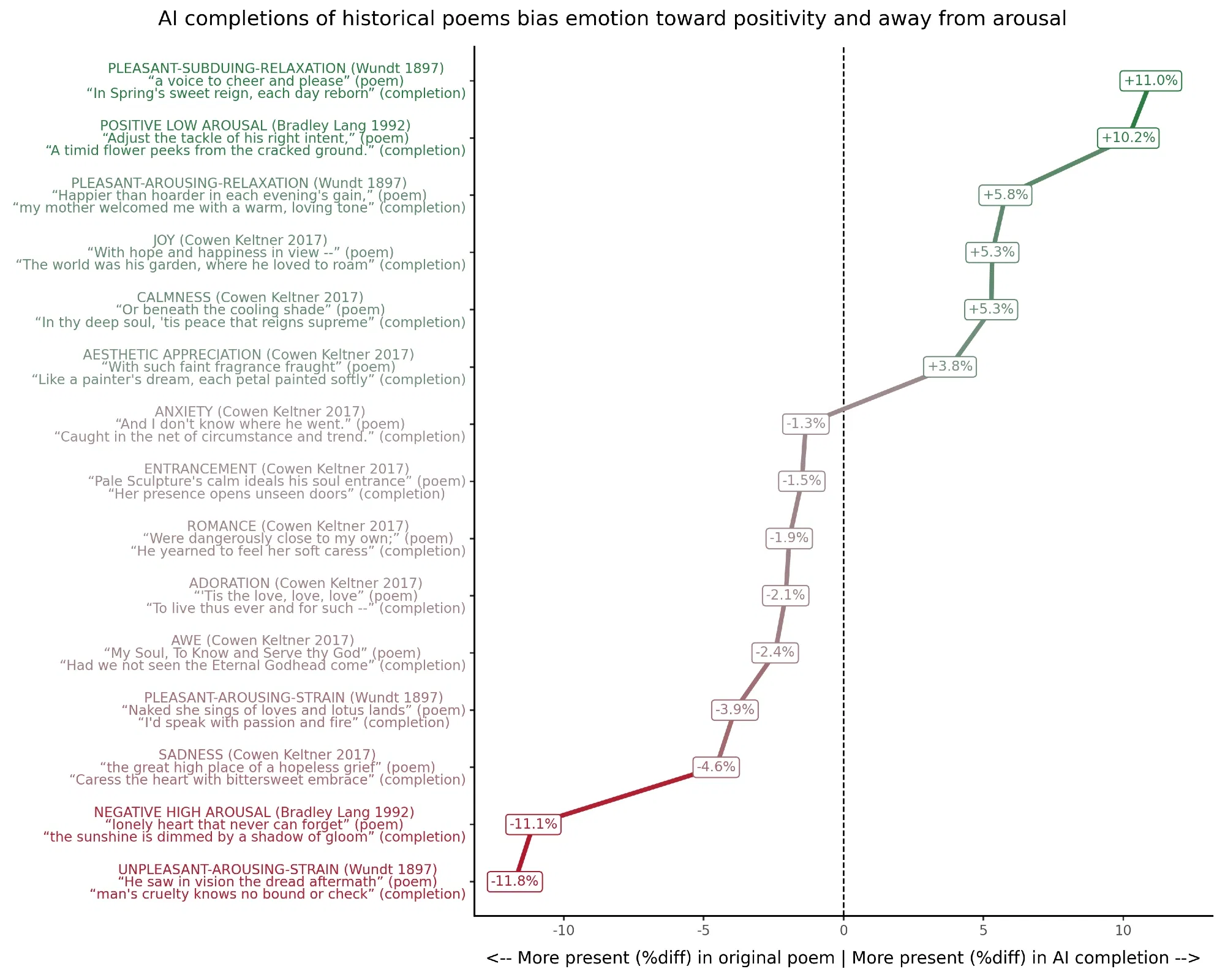
AI completions of historical poems bias emotion toward positivity and
away from arousal.
LLMs prompted with an emotion taxonomy and a poem, for 3 taxonomies x
3K human poems [Chadwyck-Healey sampled for poet DOB 1600-2000] + 3K AI
poems [9 LLMs completing first 5 lines of human poem].
Originally posted on Bluesky.
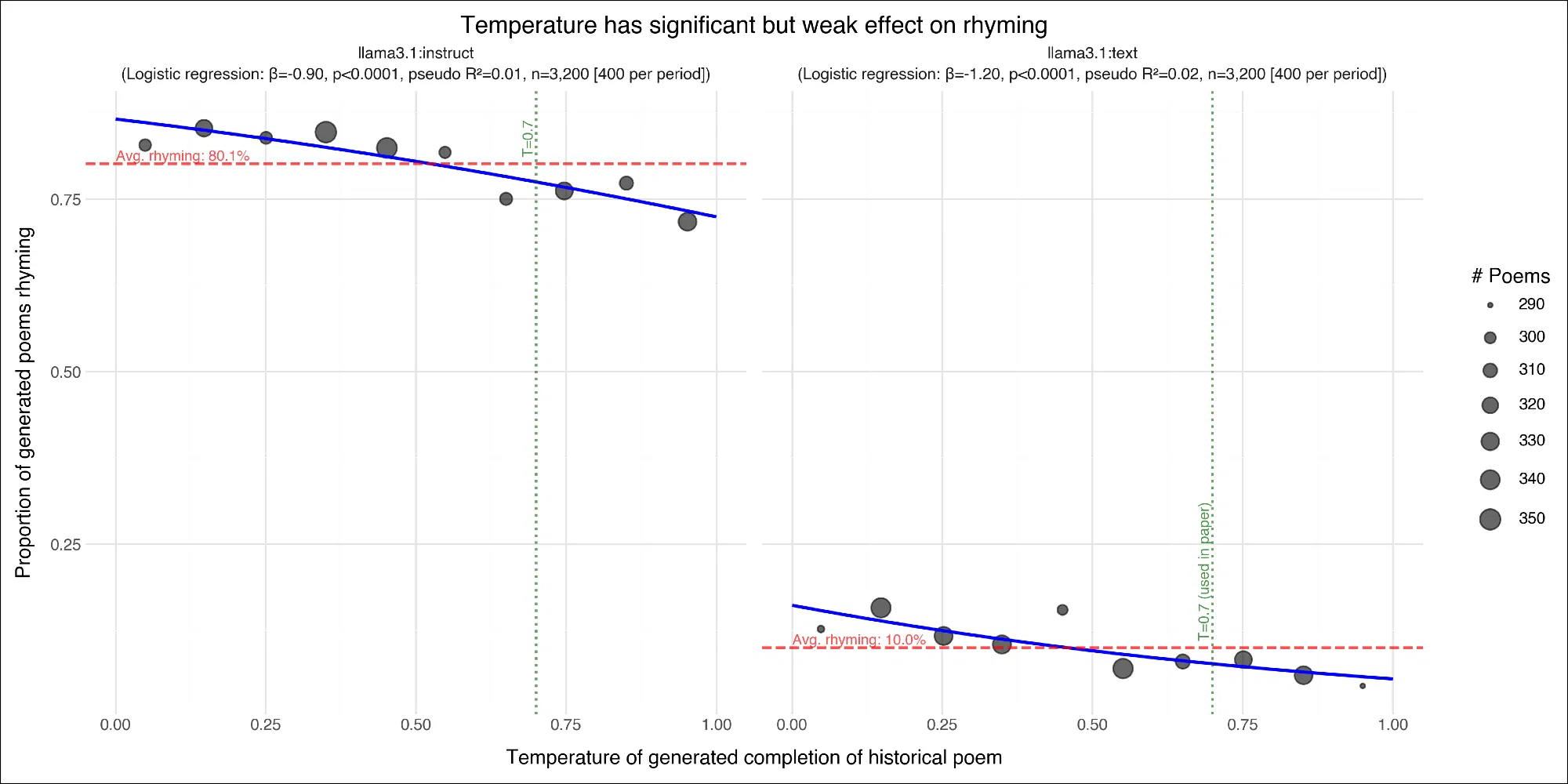
Preparing talk on this for #CHR2025 by addressing an oversight in the
paper: assessing impact of model temperature on generative poems’ rhyme.
As expected, temp negatively correlates. The effect is significant, but
very weak (R2=0.02), suggesting “formal suckness” is largely invariant
to model temp.
Continue →
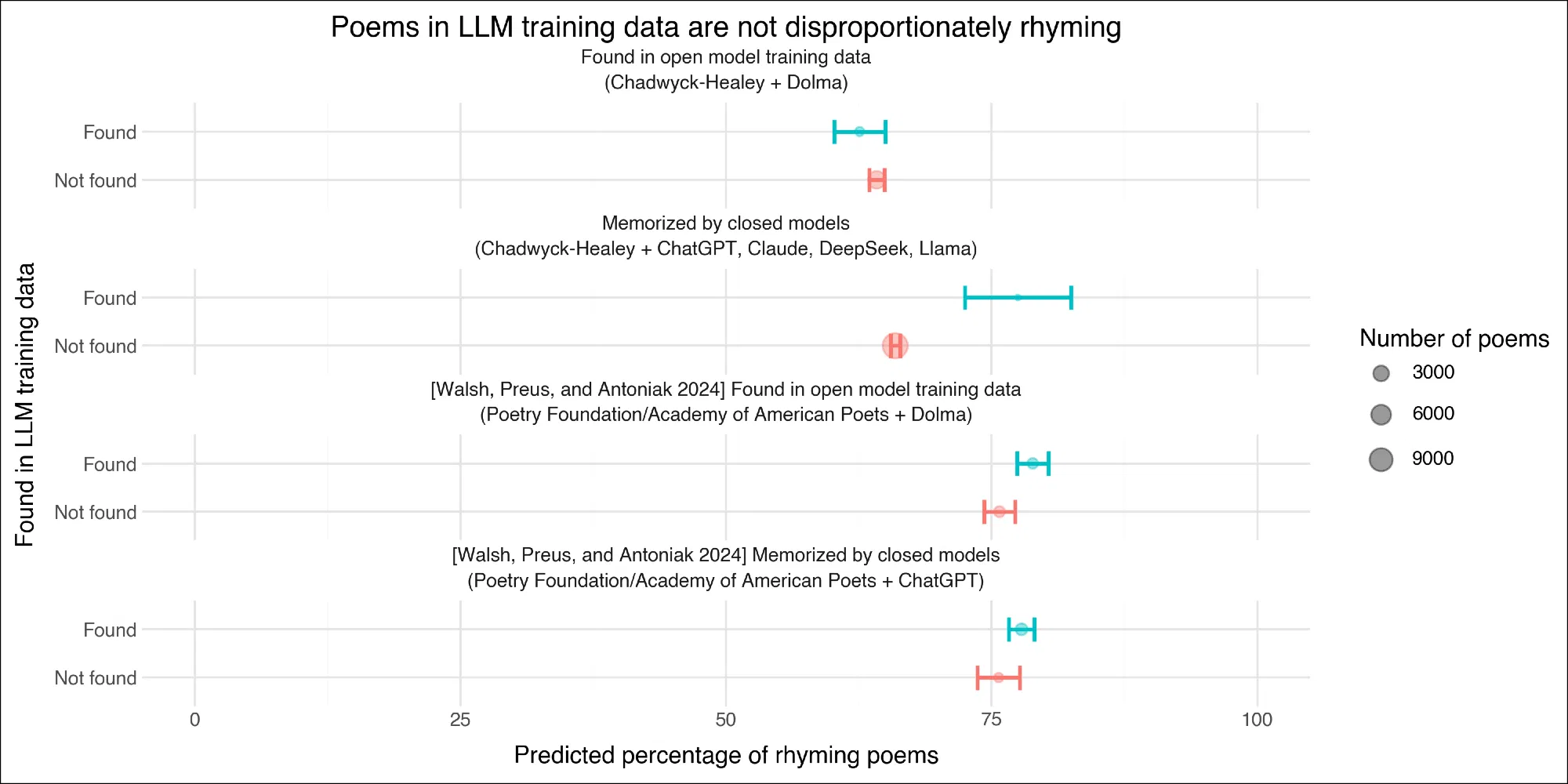
I investigate whether training data can explain this effect, and find
some evidence that it cannot. Instead, I find that “instruction-tuning”
and Reinforcement Learning Human Feedback—designed to produce “helpful”
chatbots—may instill conservative, “idealizing” aesthetic tendencies in
the models.
Continue →
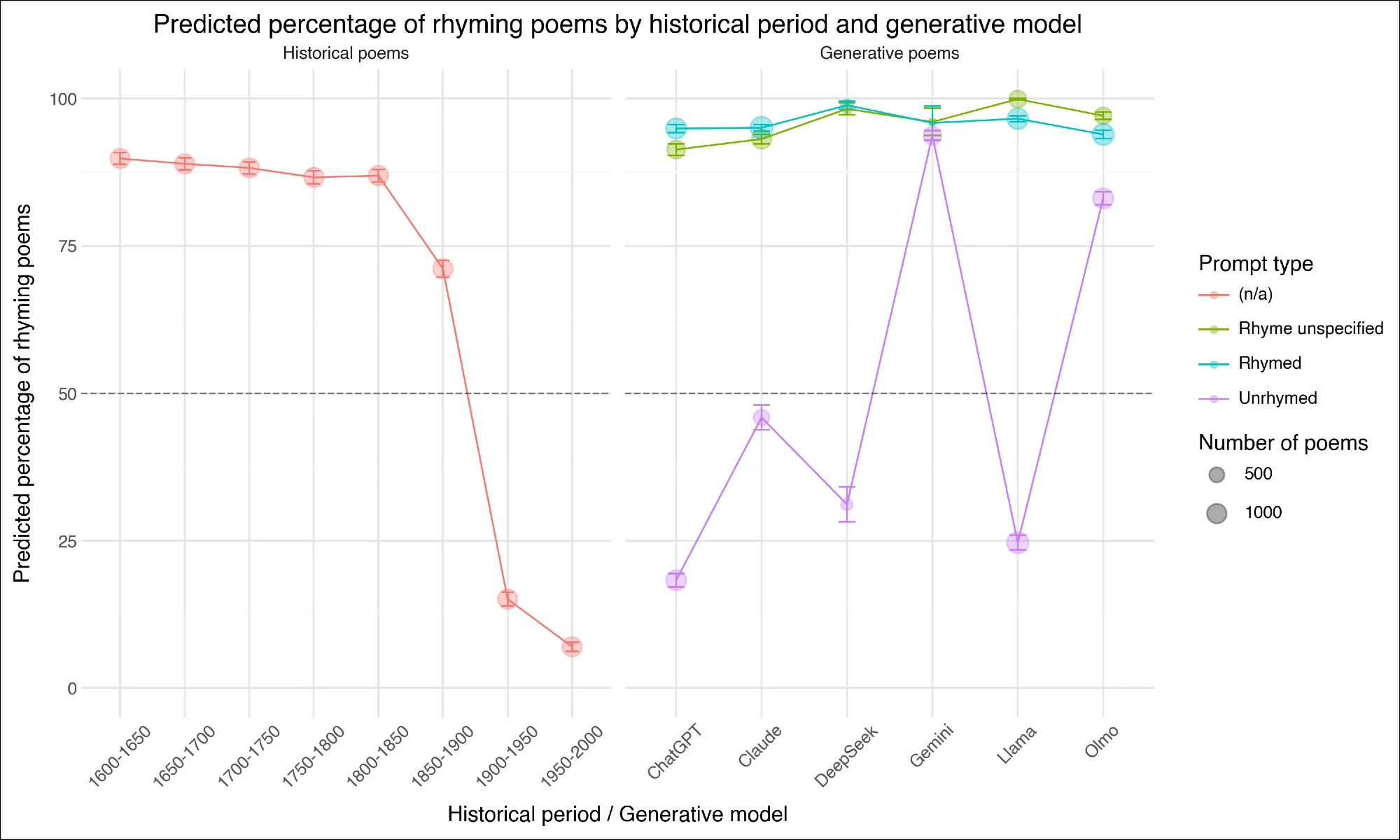
As in work by @mellymeldubs.bsky.social et al, I examine formal
tendencies in the poetic output of 9 LLMs. I find that LLM verse is
“formally stuck” on rhyme & regular meter, producing these forms far
more than even the formally strictest periods of literary history—and
even when instructed not to.
Continue →
Finally may have figured out why LLMs rhyme so compulsively:
instruction-tuning. Training an LLM to respond “helpfully” to user
queries may push models into more “pleasing” aesthetic forms.
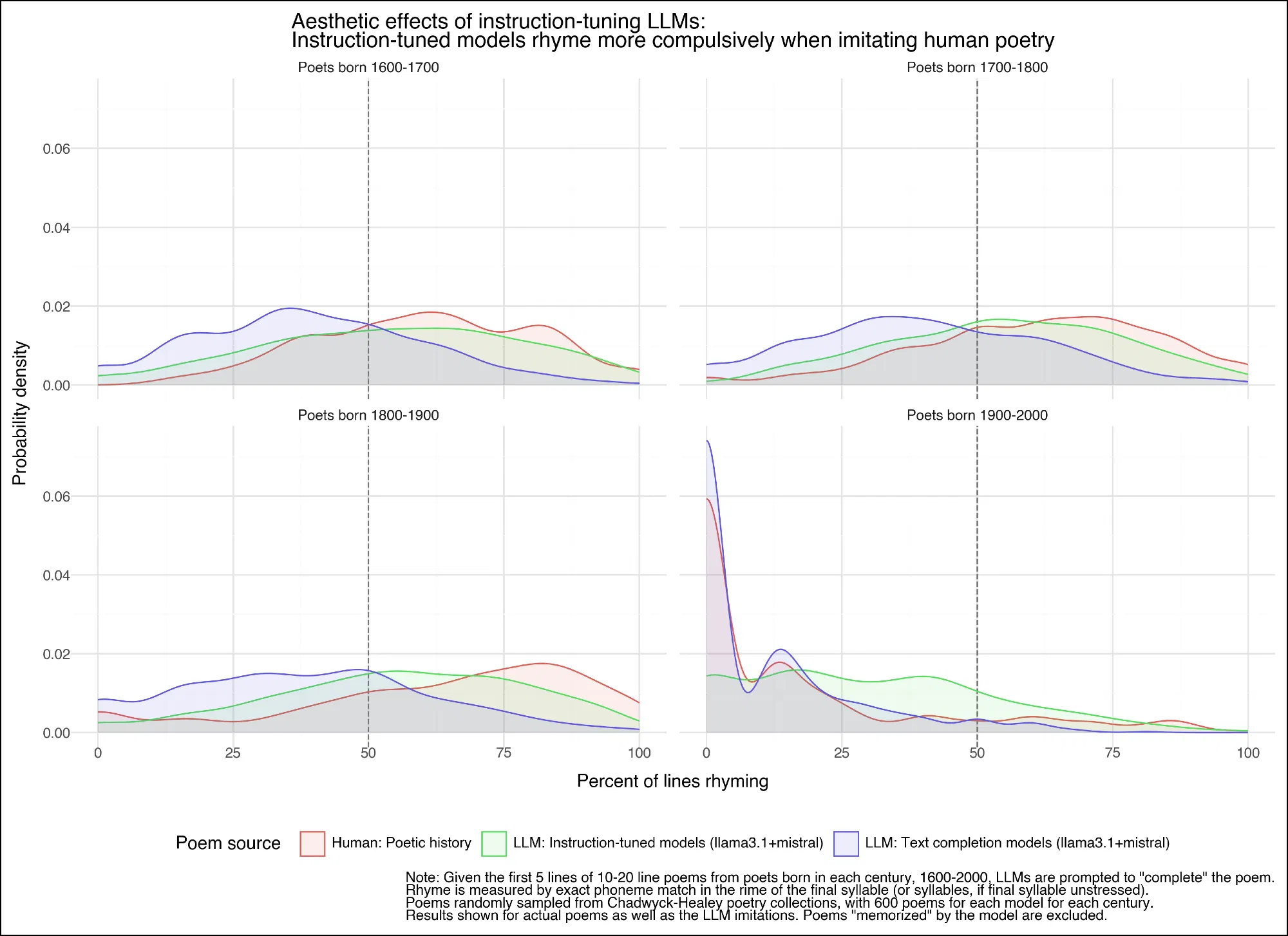
Originally posted on Bluesky.
Ok 1 more: Random House’s actual pub record of its novelists’ race
(from @richardjeanso.bsky.social’s Redlining Culture); vs. LLM models
prompted to “recall from memory” that record (authors/races RH pub’d by
yr). LLMs fantasize the same progress in diversity that So’s book
debunks as industry myth.
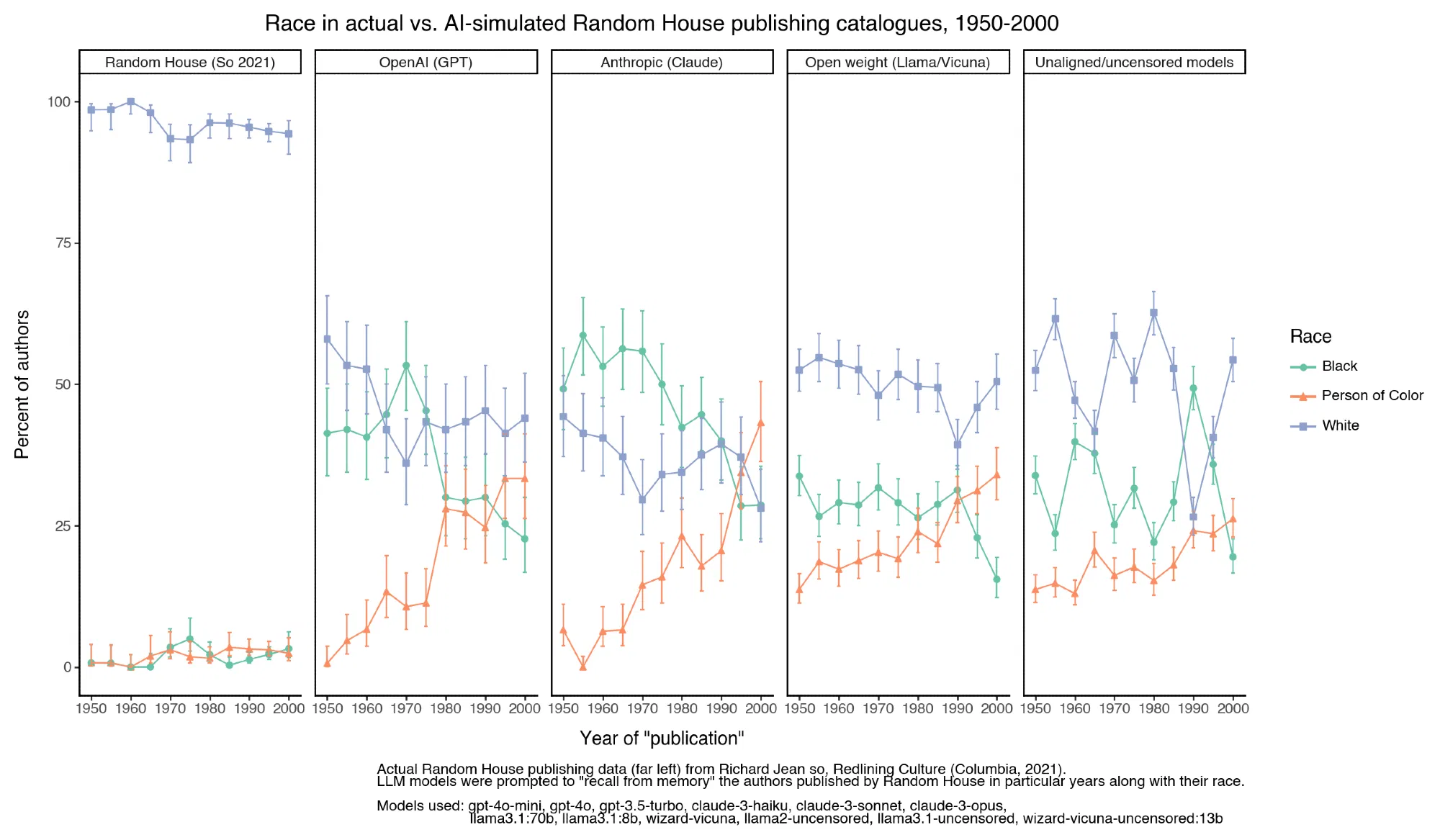
Originally posted on Bluesky.
Bizarre AI/DH experiment: how many women writers do AI models create
when asked to invent a random author for a novel published in a given
decade? Aligned (not uncensored) models hover around 100%; actual
literary history around 50%; unaligned/uncensored models are all over
the place.
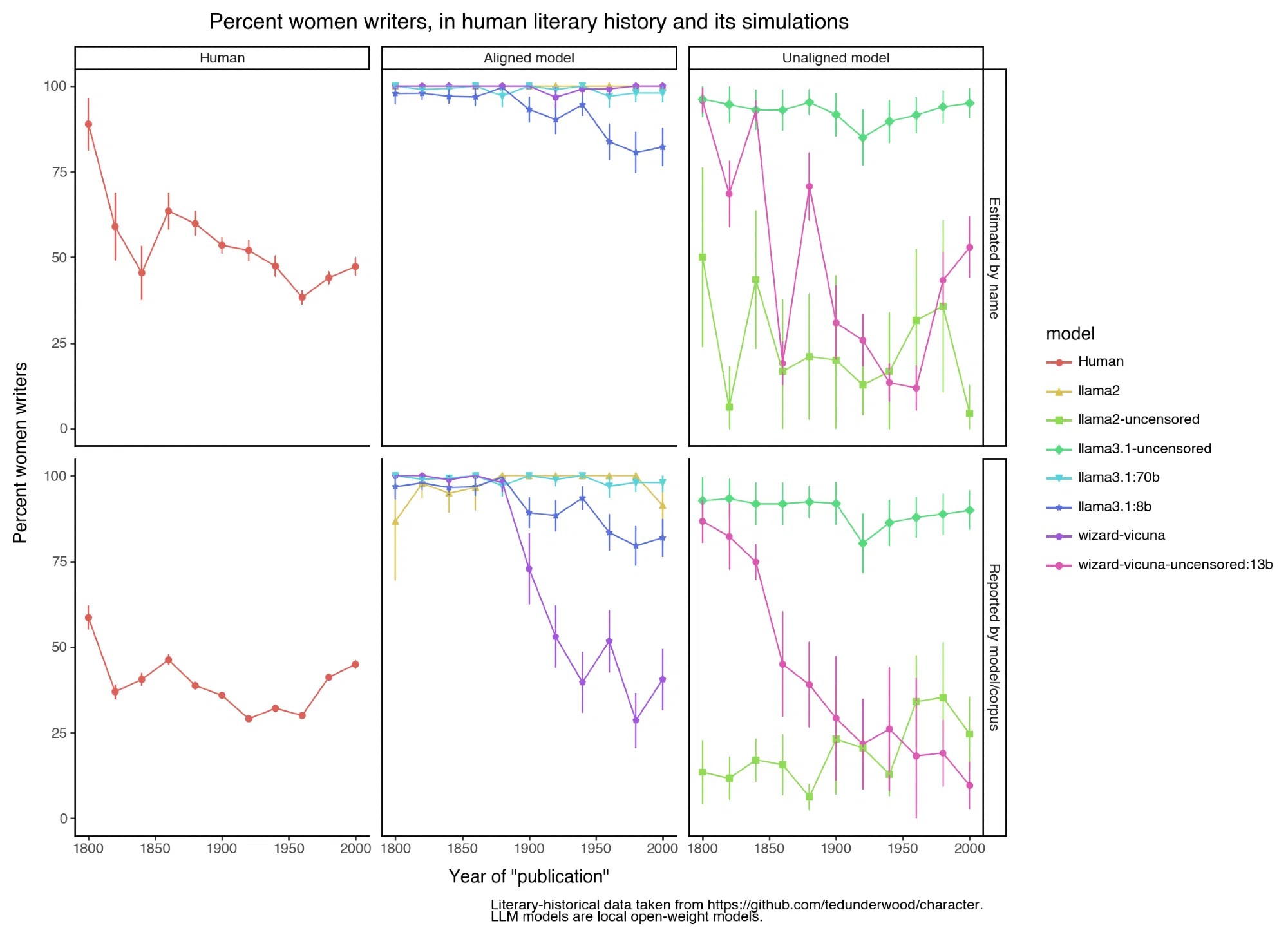
Continue →
← All projects